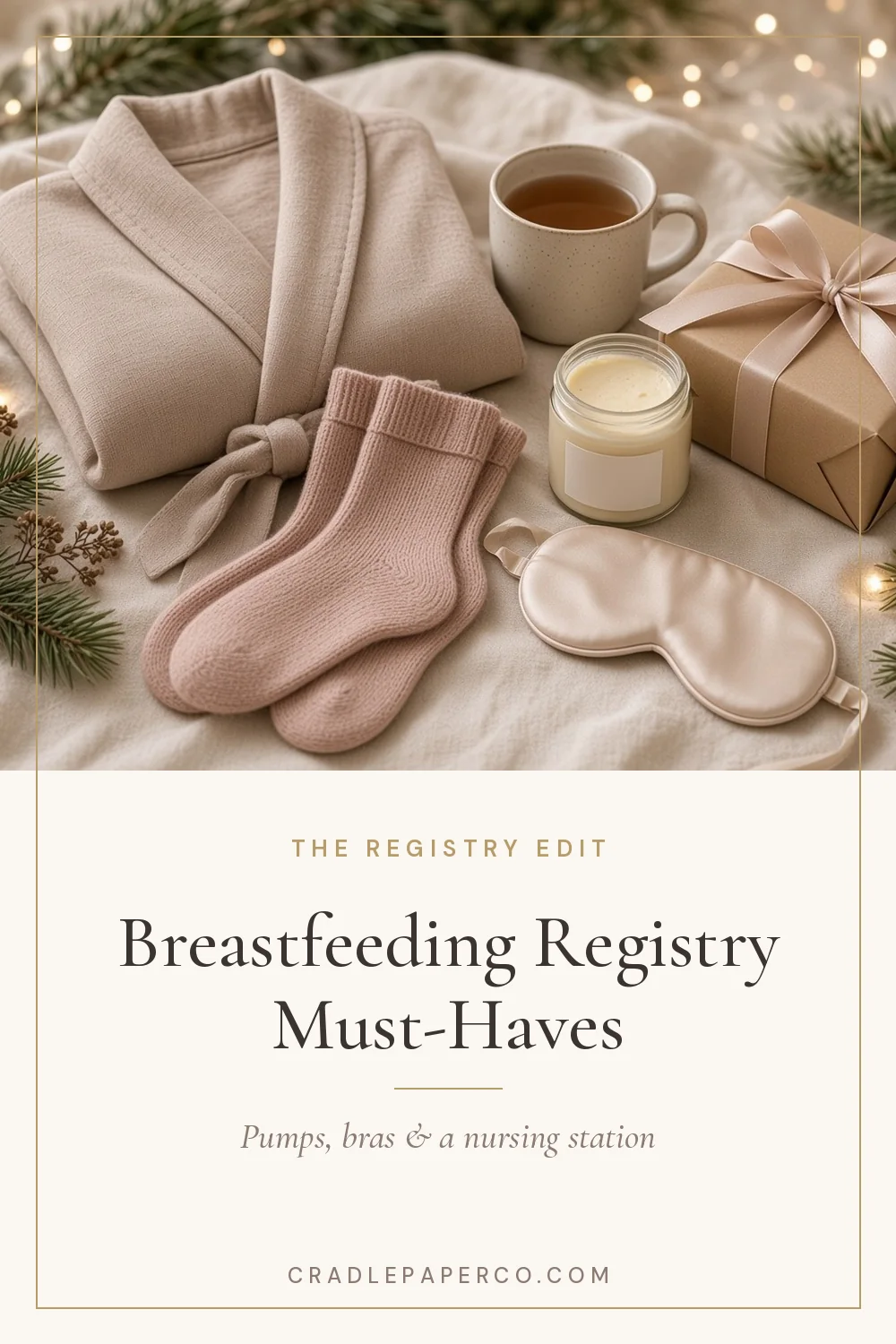
Registry Must-Haves for Breastfeeding Moms: Pumps, Bras and a Nursing Station
Nursing bras, a pump plan, milk storage, nipple care and a cozy nursing station, plus what to skip.
DisclosureAffiliate links: we may earn a small commission at no extra cost to you. We only recommend things we think are genuinely useful. As an Amazon Associate I earn from qualifying purchases. How we earn.
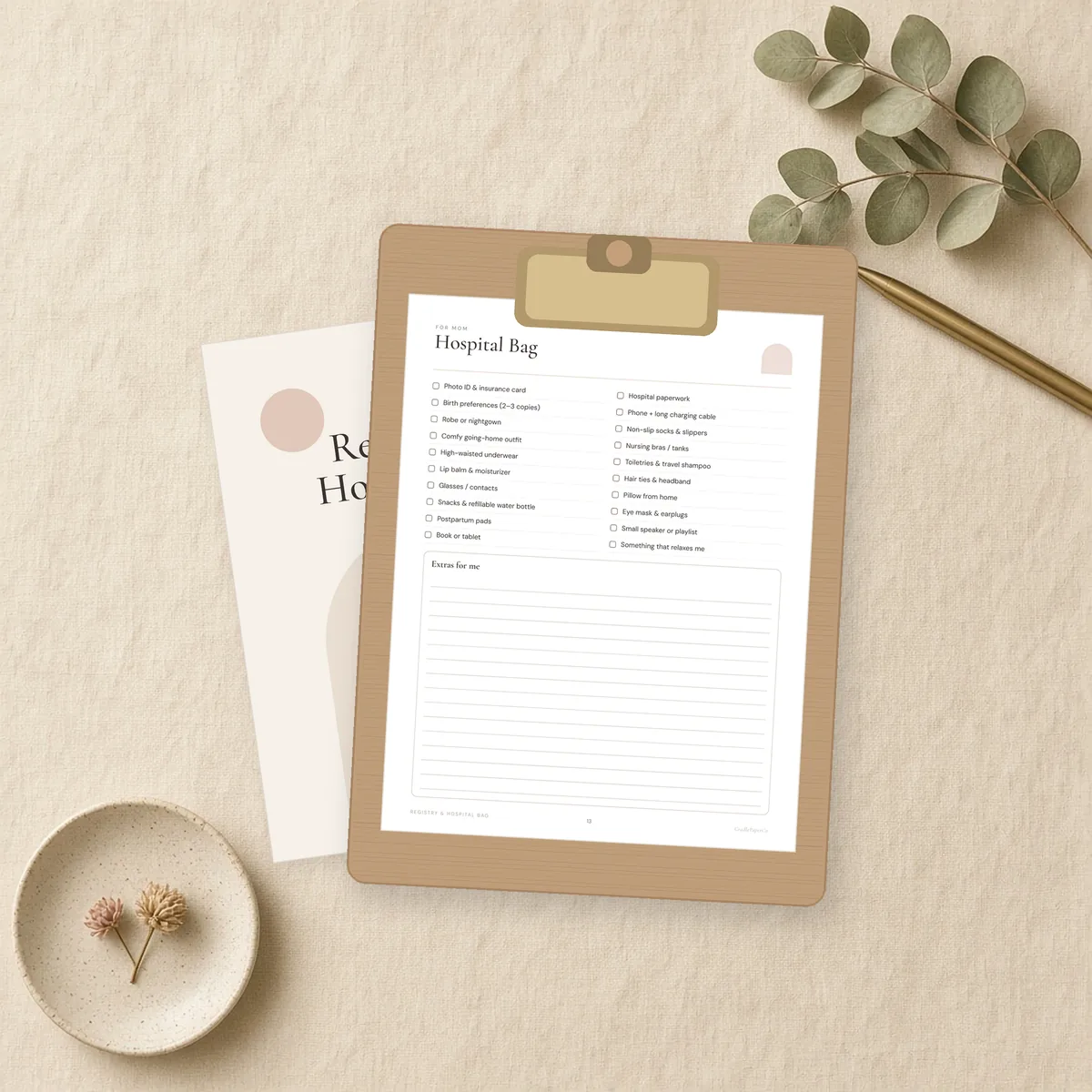
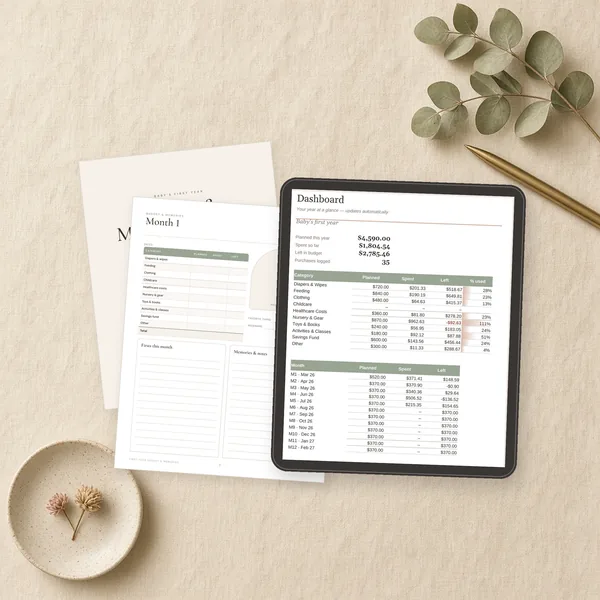
Prefer paper? Get the Registry & Hospital Bag Bundle: 20 printable pages, instant PDF.

In this guide
Breastfeeding needs surprisingly little gear, but the right few items can make the early weeks much more comfortable. This list covers what to register for, what to check with your insurance first and what can wait until you know how feeding is going.
Every feeding journey is different. Some parents exclusively breastfeed, some pump, some combine breast milk and formula. Register for the basics, then add as you learn what works. For the full newborn list, see our baby registry checklist for first-time parents.
Start With Support, Not Gear
The most valuable "item" is not on any registry: help. The AAP recommends exclusive breastfeeding for about the first six months, with continued breastfeeding alongside solid foods after that for as long as parent and baby wish. Getting started is easier with support:
- Ask for a lactation consultant at the hospital before you go home.
- Find local support, like a breastfeeding class or group, while pregnant.
- Save trusted resources, such as the CDC's breastfeeding pages and HealthyChildren.org.
If you want to, you can add a lactation consultant visit or a class to a cash fund on many registries.
Nursing Clothes
- Three or four nursing bras without underwire. Many people buy a size up from late pregnancy, or wait until a week or two after birth to size properly. Nursing bra: Buy now at Amazon
- Two or three nursing tank tops for easy access and coverage. Nursing tank top: Buy now at Amazon
- A sleep nursing bra or soft bralette for night feeds.
- A robe or front-opening pajamas for the early weeks. Maternity robe: Buy now at Amazon
Nursing bra
Soft, wire-free bras with clip-down cups. Order a range of sizes or wait until your size settles after birth.
Nipple and Breast Care
- Nipple cream or balm Nipple cream: Buy now at Amazon
- Reusable nursing pads, plus a few disposables for outings Reusable nursing pads: Buy now at Amazon
- A silicone milk collector that catches letdown on the other side during feeds Silicone milk collector: Buy now at Amazon
Pain that does not ease, cracked or bleeding nipples, or a red, hot, painful area in the breast with fever are reasons to call your provider or a lactation consultant. ACOG has helpful breastfeeding guidance on common challenges.
Pumping: Check Insurance First
Most US health plans cover a breast pump under the Affordable Care Act. Coverage differs, so call your insurer before registering for an electric pump. See HealthCare.gov on breastfeeding benefits.
Depending on your plans:
- A manual pump for occasional bottles or relieving fullness. Manual breast pump: Buy now at Amazon
- An electric pump, often through insurance, if you will return to work or pump regularly.
- A wearable pump as a convenient add-on for pumping on the go. Wearable breast pump: Buy now at Amazon
- A hands-free pumping bra, which holds flanges so your hands are free. Hands-free pumping bra: Buy now at Amazon
- Spare pump parts in the right flange size. Ask a lactation consultant to check your fit.
Hands-free pumping bra
Lets you pump while you eat, read or hold baby. Works with most standard pumps.
Milk Storage and Bottles
Even if you plan to breastfeed directly, a few bottles help a partner join in or cover the times you are apart.
- Breast milk storage bags Breast milk storage bags: Buy now at Amazon
- A starter bottle set with slow-flow nipples, in one style first Bottle starter set: Buy now at Amazon
- A bottle drying rack Bottle drying rack: Buy now at Amazon
- An insulated cooler bag for pumped milk on the go Insulated lunch bag: Buy now at Amazon
- A bottle warmer (optional; a bowl of warm water works) Bottle warmer: Buy now at Amazon
Follow the CDC's guidance on storing and preparing breast milk for safe storage times, and never microwave breast milk.
Set Up a Nursing Station
New babies feed often, usually 8 to 12 times a day in the early weeks. A comfortable spot with everything in reach makes each feed easier.
- A nursing pillow to bring baby to breast height Nursing pillow: Buy now at Amazon
- A big water bottle with a straw, since breastfeeding is thirsty work Water bottle: Buy now at Amazon
- Burp cloths within reach Burp cloths: Buy now at Amazon
- A dim night light for night feeds Night light: Buy now at Amazon
- A diaper caddy stocked with snacks, nipple cream, a phone charger and burp cloths Diaper caddy: Buy now at Amazon
- A long charging cable 10 ft phone charging cable: Buy now at Amazon
Safety note: If you feed in bed or on a couch at night, it is easy to fall asleep. The AAP advises against sleeping with baby on a couch or armchair. If you think you might doze off, feed in your bed with pillows and blankets moved away, and return baby to their own sleep space when you wake. See HealthyChildren.org on safe sleep.
Comfort for Mom
- Herbal tea (check with your provider about which herbs are suitable while breastfeeding) Herbal tea sampler: Buy now at Amazon
- One-handed snacks and freezer meals, since you will often eat with one hand Freezer meal containers: Buy now at Amazon
- A pregnancy or body pillow for side-lying rest Pregnancy pillow: Buy now at Amazon
What to Skip or Wait On
- A full set of bottles in several brands. Start with one starter set.
- A breast milk freezer stockpile setup. Wait until you know how much you will pump.
- Lactation supplements. Talk to your provider or a lactation consultant before trying any.
- A nursing cover. Many people use a muslin swaddle or nothing at all.
- Expensive nursing chairs. A supportive chair you own and a pillow often work.
A Simple Breastfeeding Registry Checklist
| Category | Register for |
|---|---|
| Clothes | 3–4 nursing bras, 2–3 nursing tanks, robe |
| Care | Nipple cream, nursing pads, milk collector |
| Pumping | Manual pump, pumping bra (electric pump via insurance) |
| Storage | Milk storage bags, starter bottles, drying rack, cooler bag |
| Station | Nursing pillow, water bottle, burp cloths, night light, caddy |
Want a printable version? Our Registry and Hospital Bag Checklist Bundle has room to add your feeding items.
Also see our minimalist baby registry and registry must-haves under $50, or browse the Registry section.
Frequently asked questions
What do I really need for breastfeeding?
The essentials are a few nursing bras, nipple cream, nursing pads, a nursing pillow, burp cloths and a water bottle. Add a pump and storage bags if you plan to give bottles or return to work.
Should I put a breast pump on my registry?
Check your insurance first. Most US health plans cover a breast pump under the Affordable Care Act. A manual pump or a pumping bra can still be good registry items.
When should I buy nursing bras?
Many people buy one or two in late pregnancy, sized up slightly, then buy more a week or two after birth once their size settles.
How many bottles do I need if I am breastfeeding?
Start with a small starter set of two to four bottles with slow-flow nipples. Add more once you know how often you will give bottles and which style baby takes.
What should be in a nursing station?
A nursing pillow, a water bottle, burp cloths, snacks, nipple cream, a phone charger and a dim night light, all within reach of a comfortable chair.
This guide is general information and not a substitute for advice from your doctor, pediatrician or a lactation consultant. Last reviewed November 3, 2026.
Keep it all on paper
Registry & Hospital Bag Bundle
Build the registry and pack the bag, without the overwhelm. 20 printable pages, $4.99. Instant PDF download.
Related printables
 Save to Pinterest